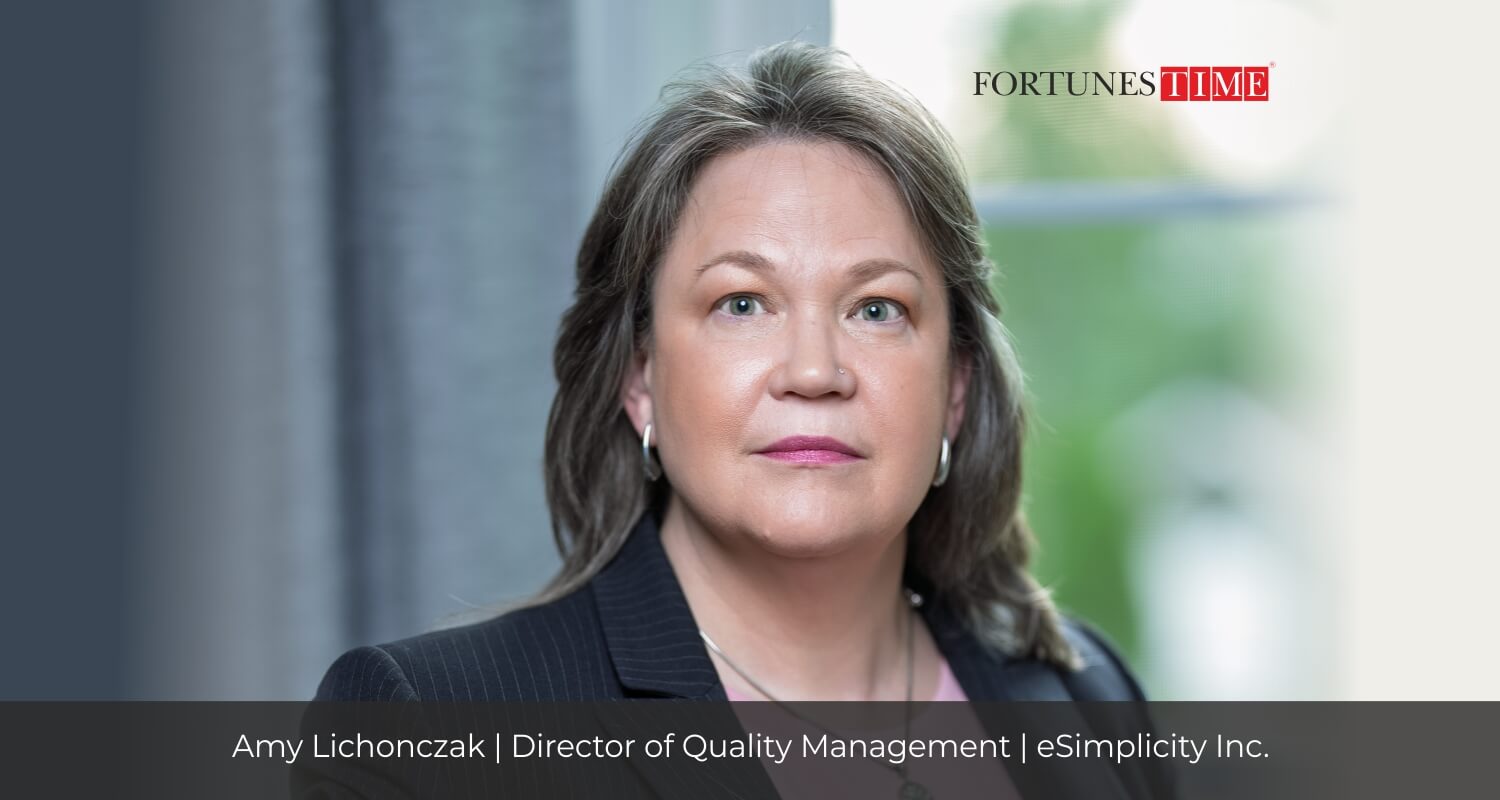
When excellence is no longer a choice but a necessity, Amy Lichonczak rises to the challenge. At the helm of Quality Management from different industries, she does more than enforce processes—she inspires them. Amy’s approach blends strategy, structure, and a strong belief in the value of people, turning quality management into a culture, not just a checklist.
Amy’s journey began in the high-stakes world of the automotive industry, where her early fascination with systems like QS-9000 and ISO 9001 sparked a lifelong passion for shaping robust, performance-driven business frameworks. While others saw compliance, she saw opportunity—an evolving landscape of standards that, when used strategically, could drive meaningful and measurable change.
Over the years, Amy’s playbook has expanded to include Baldrige Performance Excellence, CMMI Maturity Models, and a growing expertise in risk management, data analysis, and root cause evaluation. But her real superpower? Translating those complex systems into actionable, repeatable processes—designed not only to satisfy standards, but to exceed customer expectations.
Amy doesn’t just build quality departments—she nurtures cultural transformation. She understands that embedding quality into the DNA of an organization requires more than policies; it requires trust, collaboration, and leadership at every level. “The people who do the work every day are the experts,” she says. “My role is to harness that expertise into systems that deliver consistent results.”
In Amy’s hands, quality is not a static benchmark—it’s a dynamic, ever-evolving pursuit. And as businesses increasingly recognize the strategic value of quality management, leaders like Amy are guiding the way—bridging operational rigor with innovation to create organizations that don’t just perform, but thrive.
Roadmap to Professional Growth and Giving Back
For Amy, every step in her professional journey has been marked by strategy, purpose, and a deep commitment to growth—both for herself and those around her. Her first major milestone? Earning her Certified Quality Auditor (CQA) credential from the American Society for Quality (ASQ)—a decision she calls one of the most strategic and rewarding of her career.
“That certification opened the door to lifelong learning,” Amy reflects. It introduced her not only to foundational quality systems but also to an ecosystem of mentorship, community, and continuous improvement. Since then, she has gone on to earn multiple professional certifications, each carefully selected to add value to her work and her organizations, and to keep pace with evolving industry standards and technologies.
But her commitment to growth doesn’t stop with certifications. Amy sees giving back as a powerful extension of professional development. Volunteering for national charities has allowed her to build new skills, forge lasting relationships, and connect with communities in meaningful ways—no matter where she lives. “You’ll receive more than you give,” she says of community service. “It’s one of the most enriching ways to grow as a leader and professional.”
She also encourages aspiring professionals to seek out opportunities to deepen their understanding of organizational excellence. One of her top recommendations? Volunteer for your state’s Malcolm Baldrige National Quality Award program. “It offers a front-row seat to how high-performing organizations apply innovative techniques and quality principles to achieve true excellence.” Pair this with formal training in core tools like root cause analysis, risk management, and process improvement, and you’ve built a toolkit that’s as practical as it is transformational.
But learning the tools is just the beginning. Amy emphasizes the importance of practice: apply your quality skills to real work scenarios, analyze the outcomes, and refine your approach. “Use your tools to solve problems, prevent risks, or keep your team on target. That’s how you master them—not in theory, but in action.”
And when it comes to finding your voice, especially in professional settings, Amy offers wise encouragement: speak up, even when it’s uncomfortable. “It can be intimidating to voice a dissenting opinion or present in front of a group,” she acknowledges. “But with data, clarity, and calm, you can make your voice heard—even when it goes against the grain.”
She advises professionals—particularly women new to leadership spaces—to learn the culture of meetings, observe how dialogue is shared, and then enter the conversation with purpose. Whether it’s raising a hand in a structured format or contributing to an open discussion, the key is to be bold, be prepared, and bring the data.
For Amy, the journey of leadership and quality is not just about accomplishment—it’s about empowerment. It’s about learning, giving, speaking up, and always striving to build something better—for the organization, for the community, and for the next generation.
Elevating Quality at eSimplicity
At eSimplicity, innovation doesn’t stop at digital solutions—it starts with people. A trusted partner to federal agencies, eSimplicity delivers transformative technology that reshapes how the government serves in sectors like health, defense, national security, and citizen services. With a deep commitment to mission-driven outcomes, the organization blends technical excellence with human-centric design—creating real, measurable value for everyday Americans.
With decades of expertise and a passion for systemized performance, Amy plays a critical role in shaping, sustaining, and evolving the organization’s quality management systems. For her, building a quality department isn’t just about policies or checklists—it’s about relationships, collaboration, and embedding quality thinking into the fabric of the organization.
Amy’s day-to-day involves navigating the complex terrain of maintaining multiple certifications, including ISO standards, CMMI Maturity Models, and other rigorous frameworks. These standards evolve frequently, and with each change comes a new challenge—a reality Amy embraces with strategic foresight and steady leadership. From budgeting for audits and appraisals to leading root cause analyses and performance monitoring, she ensures that every element of eSimplicity’s quality infrastructure is forward-thinking, resilient, and mission-aligned.
But beyond the structure, it’s the people that energize her most. Her favorite moments are when cross-functional teams come together—collaborating, problem-solving, and exchanging knowledge to improve performance. “No two days are ever the same,” Amy reflects. “And even after all these years in Quality, I still learn something new every single day.”
Amy brings a toolbox rich in risk management, performance improvement, and problem-solving—but it’s her commitment to active leadership and shared learning that sets her apart. She understands that performance excellence is never static, and that sustaining certification isn’t about chasing compliance—it’s about building a culture that welcomes change, values insight, and grows stronger with every challenge.
In an organization where digital solutions aim to enhance national wellbeing, Amy ensures the internal systems powering that innovation are as solid as the mission they serve—driving eSimplicity forward with integrity, agility, and a tireless pursuit of quality.
Philosophy of Performance Excellence
For Amy, success isn’t just a goal—it’s a process. As a Quality System Subject Matter Expert (SME), Amy has spent her career navigating the evolution of what quality truly means in a modern organization. Her perspective is grounded in history, sharpened by experience, and focused on the future.
“Quality management a century ago,” she explains, “was primarily about identifying defective parts.” But as industries evolved, so did the concept. No longer confined to physical products, quality became synonymous with the invisible workflows and internal processes that support consistent, reliable output. And with the rise of organizational certifications, quality shifted again—taking on the role of ensuring that business objectives are met on time, with precision, and backed by meaningful metrics across departments.
Today, Amy sees quality not just as compliance or efficiency, but as performance excellence. Success, as she defines it, lies in an organization’s ability to anticipate customer needs, deliver flawlessly, and empower teams with the tools and knowledge to adapt and improve continuously.
“A successful quality department,” she says, “is one that not only understands the foundational principles of quality, but also embraces change, aligns with organizational culture, and supports its internal customers.” True quality, in Amy’s view, isn’t reactive—it’s proactive, intuitive, and deeply human.
She likens high-functioning systems to processes that are so well-designed they operate autonomously—where staff know exactly what to do, when to do it, and how to improve without skipping a beat. “It’s not enough to know where the ketchup is,” she quips with a smile. “Everyone needs to know how to restock it—and every other condiment too.” It’s a metaphor that underscores her belief in self-sufficiency, shared responsibility, and clarity of process.
Personally, Amy finds success in those quiet but powerful moments after an audit—when zero findings are reported and no one felt the need to panic beforehand. “That,” she says, “is when you know the system works—not just on paper, but in real time, every day.”
For Amy, quality is not about chasing perfection—it’s about building resilient, intelligent systems that empower people, mitigate risk, and continuously elevate how products and services are delivered. This mindset is embedded into everything she does, ensuring that the company’s products and solutions are backed by operational excellence—and that success is more than a metric, it’s a movement.
Empowering the Next Generation
Throughout her impressive career in quality management, Amy has not only built robust systems and driven organizational excellence—she’s also made it her mission to lift others along the way. Early in her professional journey, Amy had the rare advantage of learning from strong women leaders who helped her navigate the complexities of corporate life. That guidance left a lasting impact and helped shape her into the mentor, leader, and advocate she is today.
Now serving as Director of Quality Management at eSimplicity, Amy reflects on how organizations like the American Society for Quality (ASQ) and the CMMI Institute provided both technical education and access to a community of mentors that strengthened her capabilities in risk management, problem-solving, Six Sigma, and performance excellence. Equally important, she learned the often-overlooked “soft skills” essential for managing teams and building trust with leadership.
Recognizing the value of mentorship in her own journey, Amy has committed to giving back. “Because I had both formal and informal mentors early on,” she shares, “I now reach out to less experienced women to offer informal mentorship myself.” Whether through structured programs or casual guidance, she encourages rising professionals—especially those new to the quality field—to find a mentor and never hesitate to ask for help. “The members of ASQ and CMMI are incredible professionals who are happy to support the next generation of quality experts.”
Amy’s leadership philosophy is rooted in education, trust, and empowerment. From her earliest days in quality, it was clear that strong communication and a solid understanding of the fundamentals were non-negotiable at every level of an organization. She champions clear objectives, open channels for reporting performance, and supportive learning environments where teams can grow from mistakes without fear.
For Amy, micromanagement is the enemy of excellence. Instead, she believes leaders should provide encouragement, offer guidance when needed, and step back to let team shine. “Leaders must be consistent, trustworthy, and willing to remove roadblocks,” she advises. “Give credit where it’s due, and your teams will not only thank you—they’ll deliver remarkable results.”
In an industry where precision is key and change is constant; Amy leads with purpose and people at the center. By fostering mentorship and nurturing trust, she’s not only shaping systems that work—she’s helping shape the future of quality leadership, one relationship at a time.
Advice from the Top
As a seasoned quality professional, Amy knows that leadership is not about perfection—it’s about persistence, preparation, and trust. For those aspiring to lead in any industry, her advice is both practical and empowering: build your resilience, and never give up.
“Not every meeting will go as planned,” Amy says candidly. “But that doesn’t mean you stop trying. Try again. Refine your approach. Stay persistent.” It’s a philosophy that has shaped her own path, where challenges have often been stepping stones to stronger systems and more impactful outcomes.
One of the most critical skills in leadership, Amy emphasizes, is communication—and it’s also one of the hardest to master. “Information often exists, but it’s waiting for the right conversation, with the right people at the table, to unlock progress.” She advises emerging leaders to seek input, especially when facing uncertainty, and to consider how information is being presented. A simple chart or visual can often do more than a well-crafted paragraph.
Amy urges professionals to ground their communication in data and details, especially when speaking with senior leadership. “Opinions without rationale are easily dismissed. Leadership is focused on budgets, customer satisfaction, and measurable outcomes. Data may not have emotions—but decision-makers do have emotional responses to well-supported data.”
One golden rule that’s guided her career? Never present a problem without offering potential solutions. Even if your proposed ideas aren’t the final answer, they open the door for productive discussion—and demonstrate initiative, foresight, and problem-solving intent.
Amy is also a strong believer in the long game of leadership. Building trust with decision-makers doesn’t happen overnight, and it doesn’t require perfection. What it does require is consistency, courage, and a willingness to learn from each encounter.
For those ready to take on leadership roles, Amy offers more than advice—she offers a blueprint grounded in experience. In her world, leadership is earned through effort, trust is built over time, and real impact happens when persistence meets preparation.