“True healing begins when medicine looks beyond symptoms and seeks to understand the whole person.”
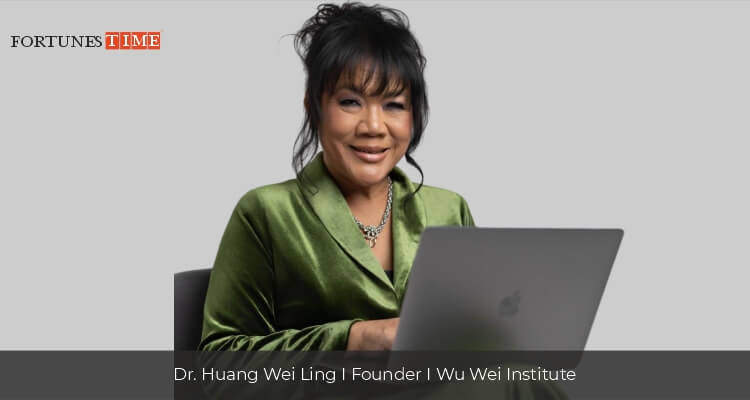
For more than three decades, Dr. Huang Wei Ling has devoted her professional life to exploring questions surrounding chronic illness, prevention, and the relationship between different medical traditions. A physician, medical researcher, and practitioner of multiple therapeutic disciplines, she has built her career around the belief that understanding a patient’s health requires looking beyond individual symptoms. Today, as the founder of the Wu Wei Institute in Franca, São Paulo, Brazil, she is developing an integrative approach that brings together Traditional Chinese Medicine, homeopathy, dietary therapy, acupuncture, and concepts surrounding energy balance.
The Wu Wei Institute was established under its current name in 2025, but its roots extend back to the Medical Acupuncture and Pain Management Clinic, which had existed since 2000. According to Dr. Wei, the direction of the Institute was strongly influenced by a patient she treated in 2006. The patient had been experiencing chronic leg pain that had not improved despite conventional medication. Using Traditional Chinese Medicine techniques focused on what she describes as energetic imbalances, Dr. Wei observed an improvement in his condition. The patient subsequently told her that another health issue had also improved: his intraocular pressure, associated with glaucoma that he had been treating for approximately four decades. According to Dr. Wei, his ophthalmologist later measured a reduction in intraocular pressure from 40 to 17 mmHg. The experience prompted her to investigate more deeply whether addressing what she regarded as underlying energetic imbalances could have broader implications for patient health.
A Medical Journey Built on Continuous Learning
Dr. Wei’s professional journey began in conventional medicine. She graduated from the State University of Londrina in Brazil in 1992 and completed her medical residency in infectious and parasitic diseases. She subsequently developed expertise in General Medicine, Parenteral and Enteral Nutrition, Acupuncture, and Pain Management. After completing her residency, she moved to Franca, where she has continued to live and practice.
A significant turning point came in 1996, when her mother encouraged her to study Traditional Chinese Medicine. The recommendation opened a new dimension of learning for Dr. Wei, who had already developed a strong foundation in Western medicine. Rather than choosing between different medical traditions, she began exploring how their respective perspectives might contribute to a broader understanding of health. Her experience of studying both conventional medicine and Traditional Chinese Medicine became an important part of the perspective she later brought to her research.
Her interest in energetic concepts became particularly important in her work around 2014, when she says she began observing significant changes in the energy levels of many patients when evaluated according to Traditional Chinese Medicine principles. She subsequently developed the concept she calls “New Global Immunodeficiency,” which, within her framework, describes what she believes is a widespread alteration in human energetic patterns. Dr. Wei associates this phenomenon with modern environmental and electromagnetic influences, including the development of 4G and 5G communication systems. These views form part of her ongoing research and represent an area where she seeks further discussion and investigation within healthcare.
The discovery also coincided with her studies in homeopathy. In 2015, while completing a homeopathy course, she was required to prepare a monograph. Drawing upon her knowledge of Traditional Chinese Medicine and the work of Samuel Hahnemann, she developed a new theoretical approach that sought to simplify the selection of homeopathic medicines. Rather than working with the extensive range of remedies traditionally available within homeopathy, she developed an approach centered on five principal medicines. This methodology eventually became known as the Wu Wei Protocol.
From One Clinical Experience to an International Platform
The patient experience that influenced Dr. Wei’s thinking in 2006 ultimately led her toward a much broader commitment to research and education. She began presenting her observations at conferences internationally, discussing her belief that healthcare should consider conditions that may exist before they become detectable through conventional examinations.
Over the course of her career, Dr. Wei says she has participated in approximately 500 conferences around the world and contributed to nearly 300 scientific articles. One of her presentations took place at Harvard in 2015, where she discussed her perspective that addressing energetic imbalances could potentially influence multiple conditions within the same patient. Her presentations have become an important vehicle through which she communicates her ideas to physicians and healthcare professionals from different backgrounds.
For Dr. Wei, research is not limited to documenting observations. It is also about encouraging professionals to question assumptions, examine different perspectives, and remain open to continued learning. She believes that medicine can benefit from constructive dialogue between different traditions, particularly when the ultimate objective remains improving patient care.
The philosophy behind her work is rooted in what she describes as root-cause treatment. Rather than concentrating exclusively on the symptoms presented by an individual patient, she seeks to understand what she considers the underlying factors contributing to those symptoms. Within the Wu Wei Protocol, this means examining energetic deficiencies according to the principles she has developed through her study of Traditional Chinese Medicine and homeopathy.
The Birth of the Wu Wei Institute
As Dr. Wei’s clinical, educational, and research activities expanded, the identity of her organization evolved as well. The Medical Acupuncture and Pain Management Clinic had initially been established primarily around clinical services, but its activities gradually expanded to include scientific writing, lectures, international presentations, physician education, and research. In 2025, the organization adopted the name Wu Wei Institute, reflecting the methodology and philosophy that had developed through Dr. Wei’s work.
The name itself has personal and philosophical significance. According to Dr. Wei, “Wu” refers to five, representing the five solid organs that occupy an important place within her interpretation of Traditional Chinese Medicine, while “Wei” is her own name as the creator of the treatment methodology. The Institute therefore carries both a reference to the five-organ framework underlying the Wu Wei Protocol and Dr. Wei’s personal connection to the methodology.
Today, the Wu Wei Institute is intended to function as more than a clinical practice. Its activities encompass patient treatment, research, educational initiatives, scientific publications, lectures, and the development of training opportunities for healthcare professionals. Dr. Wei is also planning a mentorship program designed to introduce professionals to her methodology and to the clinical reasoning behind her approach.
Challenging Conventional Thinking
Dr. Wei’s work has developed within a healthcare environment where conventional medicine remains the dominant framework for diagnosis and treatment. She acknowledges that this creates significant challenges for researchers attempting to introduce concepts that are not traditionally emphasized within Western medical education.
One of the central challenges she identifies is the difference between what conventional medicine can readily measure and what she believes may occur at an energetic level before structural disease becomes apparent. She argues that medical professionals should have opportunities to study a wider range of perspectives and believes that medical education could benefit from greater interdisciplinary dialogue.
Her approach is not based on rejecting conventional medicine. Instead, she describes her work as an attempt to expand the way healthcare professionals understand patients by bringing together knowledge from different traditions. Traditional Chinese Medicine, homeopathy, Ayurvedic principles, dietary approaches, and Western medicine each contribute, in her view, different perspectives that can be considered when developing a more comprehensive understanding of an individual’s health.
This position has also shaped her response to criticism. Dr. Wei recognizes that new approaches naturally attract skepticism and debate. Rather than regarding disagreement as a reason to stop, she believes research should continue through observation, documentation, discussion, and education. Her response has been to continue presenting her ideas internationally, publishing her work, and developing educational resources through the Wu Wei Institute.
A Philosophy of Prevention and Root-Cause Care
Prevention occupies an important place in Dr. Wei’s professional philosophy. She believes that healthcare should not focus solely on treating established disease but should also consider changes that may occur before illness becomes clinically apparent. Within her interpretation of Traditional Chinese Medicine, this includes observing patterns associated with changes in energy and overall balance.
This perspective has influenced the way she approaches patient care. Instead of viewing an individual solely through the diagnosis they present, she seeks to consider the broader context of their health, including lifestyle, nutrition, emotional wellbeing, environmental influences, and other factors. The objective, within her therapeutic framework, is to understand the patient as an interconnected whole.
Dr. Wei also emphasizes that treatment should be individualized. Different patients may respond differently to interventions, and she believes healthcare professionals should therefore remain attentive to the individual’s overall condition rather than applying a single approach to every situation.
Her belief in prevention also extends to her educational ambitions. Through the Wu Wei Institute, she hopes to encourage healthcare professionals to consider how earlier intervention might influence long-term health outcomes. The Institute’s future educational programs are intended to provide professionals with an opportunity to study the methodology in a structured environment.
The Researcher Behind the Work
Dr. Wei describes her responsibility as a medical researcher in straightforward terms: to communicate honestly about what she observes while remaining committed to continued investigation. She believes researchers have an obligation to share observations that may contribute to new questions, even when those observations challenge established perspectives.
Her career has therefore combined clinical practice with writing, teaching, conference presentations, and research. The approximately 500 conferences and 300 scientific articles she cites represent decades of effort to communicate her perspective internationally.
At the heart of this work is her belief that healthcare professionals should never stop learning. She frequently draws inspiration from historical medical thinkers and emphasizes the importance of intellectual humility. For Dr. Wei, completing medical school or building decades of experience does not mean that learning is finished. Instead, every new patient and every new observation can create another opportunity to ask questions.
This philosophy has also influenced the culture she hopes to establish within the Wu Wei Institute. Education is not viewed as a one-time activity but as a continuing responsibility. Through books, scientific articles, conferences, mentorship, and professional training, she hopes to create an environment where healthcare professionals can continue developing their knowledge throughout their careers.
Leadership Through Perseverance
Dr. Wei believes that leadership begins with purpose. Since graduating from medical school more than three decades ago, she has continued studying and developing her ideas, even when doing so required challenging established ways of thinking.
She considers perseverance one of the qualities that can sometimes be lacking among emerging leaders. Innovative ideas require time to develop, and meaningful projects rarely progress without setbacks. For leaders attempting to introduce new concepts, she believes conviction must be accompanied by patience, discipline, and a willingness to continue working toward long-term objectives.
Her leadership philosophy is also influenced by faith. She believes that remaining connected to a sense of purpose can provide the strength required to continue during difficult periods. In her view, leadership is not simply about directing an organization; it is about planting ideas, developing people, and remaining committed to a meaningful objective.
Dr. Wei frequently returns to the principle that progress requires different thinking. She draws upon Albert Einstein’s well-known observation that problems cannot be solved using the same thinking that created them. For her, this principle reflects the need for healthcare professionals to remain willing to examine established assumptions and explore additional possibilities.
Building the Right Team
For the Wu Wei Institute, building an effective team involves more than technical qualifications. Dr. Wei looks for individuals who can communicate effectively, understand the importance of trust, and demonstrate honesty in their professional relationships.
She considers communication particularly important because healthcare is fundamentally human. Patients need professionals who can listen carefully, explain information clearly, and create an environment where they feel respected. Technical knowledge is essential, but empathy and interpersonal skills also contribute to the overall patient experience.
The Institute also values individuals who are comfortable with technology. Dr. Wei identifies computer literacy and familiarity with artificial intelligence as useful skills for today’s healthcare environment. Alongside education and professional experience, however, she considers integrity and trustworthiness fundamental qualities for anyone joining her team.
The Human Side of Healthcare
Despite the increasing role of technology in medicine, Dr. Wei believes the human connection between physician and patient must remain central. Artificial intelligence, digital records, advanced diagnostics, and other technologies can improve efficiency and provide valuable information, but they cannot replace the importance of listening and understanding.
For her, every consultation should begin with the patient’s complete story. A diagnosis may describe a medical condition, but it does not necessarily capture the individual’s fears, experiences, lifestyle, family circumstances, or aspirations. Understanding these elements, she believes, helps create a more patient-centered approach.
This human perspective also influences the happiest moments of her professional life. Dr. Wei says the most rewarding experiences occur when patients who have struggled with health problems begin to regain quality of life. She recalls cases in which patients experienced improvements following interventions such as acupuncture, dietary changes, and the Wu Wei Protocol.
One case she particularly remembers involved a child with a neurological condition whose mother sent her a video while Dr. Wei was away on vacation. The child had previously required significant assistance to walk because of severe muscle rigidity, but after treatment, the child was shown walking independently. For Dr. Wei, experiences like this reinforce the human purpose behind research and clinical practice.
Research Inspired by Clinical Experience
Dr. Wei’s research philosophy has been shaped significantly by the patients she has encountered throughout her career. She views clinical experience as a source of questions that can lead to further research and investigation.
One recent case she describes involved a patient experiencing hip pain who had consulted a specialist and received medication. According to Dr. Wei, the patient subsequently experienced serious symptoms and sought her assistance. She treated him using scalp acupuncture and adjusted the Wu Wei Protocol he was already receiving, after which she observed improvement within several hours.
Cases such as this reinforce her belief that clinical outcomes can generate questions worthy of further investigation. She emphasizes that her responsibility is to document and communicate what she observes rather than simply accept existing assumptions.
This approach has helped shape her identity as both physician and researcher. For Dr. Wei, the two roles are interconnected: clinical practice provides experiences, research provides opportunities to examine those experiences, and education provides a means of sharing the resulting knowledge with other professionals.
A Vision for Global Education
The next phase of the Wu Wei Institute is centered heavily on education. Dr. Wei is developing a mentorship program for healthcare professionals who want to study her methodology and explore the principles behind her approach to energetic health.
She believes professionals should first understand the methodology through their own learning and experience before introducing it into their work with patients. In her view, effective healthcare education requires both theoretical understanding and practical engagement.
Over the next three to five years, she hopes the Institute will reach healthcare professionals and communities in multiple countries. The objective is not simply to expand geographically but to make the Institute’s educational resources more accessible and encourage international dialogue around integrative healthcare.
Books will form an important part of this strategy. Dr. Wei plans to develop publications covering different medical specialties and use them as educational materials for students and professionals. She sees written knowledge as a way to extend the Institute’s reach beyond its physical location in Brazil.
A New Generation of Integrative Practitioners
Dr. Wei’s long-term ambition is to establish the Wu Wei Institute as an international platform for education, research, and professional development. She envisions a network of healthcare professionals who understand different medical traditions and can engage with them thoughtfully.
Her approach to expansion is deliberately gradual. Rather than pursuing rapid growth for its own sake, she believes sustainable development depends on education, consistent research, professional training, and the creation of strong international relationships.
Each conference provides an opportunity to introduce new audiences to the Institute’s ideas. Each scientific publication creates another opportunity for discussion. Each professional trained through the Institute potentially carries that knowledge into another clinical environment.
In this sense, Dr. Wei measures growth not only by organizational size but by the number of people who gain access to knowledge and education. The broader objective is to contribute to a healthcare environment where professionals remain curious, collaborative, and willing to consider multiple perspectives.
Success Defined by Purpose
For Dr. Wei, professional success is closely connected to purpose. Awards, publications, conferences, and organizational achievements are meaningful milestones, but they are not the ultimate measure of a career.
She considers success to be the ability to fulfill the mission she has established for herself: to share knowledge, develop her therapeutic methodology, educate healthcare professionals, and contribute to improving people’s quality of life.
Personal success has a simpler definition. She describes it as having health, peace, and the ability to sleep peacefully knowing that she has fulfilled her purpose. Financial resources, in her view, are important because they make it possible to continue developing projects and supporting charitable initiatives, but money itself is not the ultimate objective.
This distinction between achievement and purpose is central to her leadership philosophy. Professional recognition may come as a consequence of meaningful work, but the work itself must remain grounded in values.
Lessons from Music and Sport
Some of Dr. Wei’s most important lessons about discipline were learned outside medicine. As a child, she studied piano, where mastering increasingly complex pieces required patience, repetition, and consistency. The experience taught her that excellence develops through sustained effort rather than talent alone.
Tennis provided another lesson: perseverance. A match can appear nearly impossible to win, yet circumstances can change when a player remains focused until the final point. Dr. Wei sees a similar principle in research and innovation. New ideas may encounter resistance, research may take years, and meaningful change may require repeated effort.
These experiences became valuable references throughout her professional career. Whether studying medicine, developing new therapeutic concepts, presenting internationally, or establishing the Wu Wei Institute, she has relied on the same qualities of discipline, persistence, and continuous improvement.
A New Chapter for the Institute
The Wu Wei Institute represents the latest stage of a journey that began with Dr. Wei’s medical education and evolved through decades of clinical experience, study, research, and international communication. Although the Institute’s current name is relatively new, its foundation rests upon more than two decades of clinical activity and more than thirty years of Dr. Wei’s professional development.
Its mission is broader than providing clinical services. The Institute seeks to create a platform where research, education, patient care, and professional development can exist together. Through its publications, conferences, mentorship initiatives, and planned educational programs, it aims to create opportunities for healthcare professionals to examine integrative approaches in greater depth.
Dr. Wei’s ambition is ultimately to create an institution capable of contributing to conversations about the future of healthcare while maintaining a strong focus on education and patient wellbeing. She believes that the challenges facing healthcare today require professionals to continue learning and to remain willing to examine perspectives beyond the boundaries of a single discipline.
Looking Toward the Future
The future Dr. Wei envisions for the Wu Wei Institute extends beyond Brazil. She hopes to increase access to the Wu Wei Protocol, develop international educational partnerships, publish additional research and books, and establish training programs for professionals interested in her methodology.
A major part of this vision is the development of a mentorship structure that can provide healthcare professionals with a systematic introduction to the principles underlying the Institute’s approach. She believes that professionals should first develop a strong understanding of the methodology before incorporating it into their own practice.
Her goal is therefore not simply to build a larger organization but to create a sustainable educational ecosystem. The Institute’s success, in her view, will depend upon the quality of the professionals it trains, the knowledge it develops, the conversations it encourages, and the people whose lives may benefit from its work.
A Book, a Methodology, and a Continuing Mission
Dr. Wei is also expanding her work through publishing. Her forthcoming book, “Cancer Begins Before the Tumor,” is scheduled for publication in the coming period. In the book, she explores her perspective on changes within what she describes as the biological terrain of the human body and argues for greater attention to factors that may precede the development of cancer.
The book forms part of a broader strategy to document and communicate the ideas that have emerged from her years of clinical practice and research. Additional books covering different medical specialties are also planned, creating a body of educational material that can support future training programs.
For Dr. Wei, writing is another form of education. While conferences allow her to communicate directly with professional audiences, books provide an opportunity to develop ideas in greater depth and make them available to a wider readership.
The Meaning of a Medical Legacy
Ultimately, Dr. Huang Wei Ling’s professional journey is defined by a persistent desire to understand more. From conventional medical training to Traditional Chinese Medicine, acupuncture, pain management, nutrition, and homeopathy, her career has been characterized by continuous study and a willingness to explore different approaches.
Her work remains centered on the belief that healthcare should consider the whole person. She argues that symptoms are only one part of the picture and that greater attention should be given to prevention, lifestyle, nutrition, and the broader circumstances surrounding an individual’s health.
The ideas she has developed through the Wu Wei Protocol and her concept of New Global Immunodeficiency remain part of her ongoing research and professional perspective. By presenting these ideas through conferences, publications, books, clinical work, and education, she hopes to encourage further examination and discussion among healthcare professionals.
Her broader ambition is reflected in the evolution from a medical clinic into the Wu Wei Institute: a platform intended to bring together patient care, research, education, and professional development. The Institute represents both the continuation of Dr. Wei’s personal journey and the foundation for a larger educational mission.
For Dr. Wei, the journey is far from complete. She continues to study, write, teach, treat patients, and develop new educational initiatives. Her definition of progress remains closely tied to learning and service: asking better questions, exploring different perspectives, sharing knowledge, and helping others improve their quality of life.
The future of the Wu Wei Institute will depend on how effectively it can translate that vision into education, research, professional collaboration, and responsible clinical practice. Yet one principle remains constant throughout Dr. Wei’s career: medicine should never stop learning.
Her story is therefore not simply about establishing an institute or developing a therapeutic protocol. It is about a physician who spent more than three decades asking questions, pursuing knowledge across different traditions, and building a platform through which those questions could continue to be explored.
And for Dr. Huang Wei Ling, that pursuit of knowledge remains the foundation of her mission – to look beyond symptoms, understand the individual more completely, and continue searching for new possibilities in the evolving field of integrative healthcare.